

Did you know June 21st is ‘show your stripes’ day? It’s also the summer solstice, a day that marks the transition from Spring into Summer in the northern hemisphere.
Show your stripes is about much more than the change of season, yes it’s about environmental protection but it extends far beyond that. It’s about big ideas and working together to solve problems.
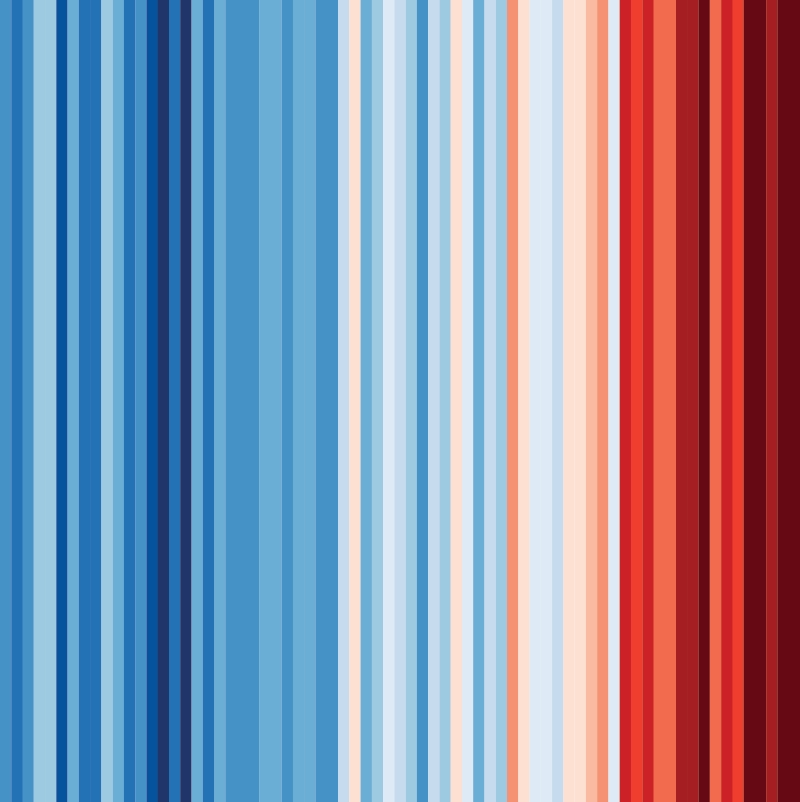
At the heart of the show your stripes movement is a simple graphic that is becoming increasingly recognised – the warming stripes. This blog is about the work we have contributed towards “Show your stripes”.
Team stripes
The warming stripe idea was developed by Professor Ed Hawkins, a climatologist at the University of Reading. He used data collected by research teams in the polar regions to create the first warming stripe graphics.
Following the initial success of the first graphic, data was sourced from lots of other research institutes around the world. This wider set of data was fed into the same visualisation package, and showyourstripes.info was born, allowing people to segment and focus the data, creating graphics for geographic areas, countries and many other segments.
The message remains clear, whichever dataset, the planet is currently warming at a dramatic rate. It’s a story that we all know.
The first stripes were created in 2016, fast forward to 2023 and ‘show your stripes’ day was launched. This is an attempt to keep the ideas of sustainability and planet protection front of mind, reminding people that this is a collective problem that we can overcome by working together.
How I got involved
In 2019 I was developing a number of wearable and smart clothes ideas. Having launched DressCode (in 2018), there was a strong interest in our CashCuff – countactless payment products. Pre pandemic people were blown away by the idea that you could pay for things using contactless technology. I had begun to explore what else we could do with NFC and other technologies within smart clothing.
It was at this time that I met a researcher from the British Antarctic Survey (BAS). He showed me some of the challenges they faced in the field and we talked about what could be done with wearables to help. It was a great conversation – passionate people and lots of energetic to and fro as we explored the subject at length.
A couple of months later I was contacted by another member of the BAS team asking if I could share the work we did (at DressCode) with the wider BAS team as part of their development and learning programme.
I thought that this sounded interesting, nature and the caring for our planet is important to me, the opportunity to share that with like-minded people sounded like something that I wanted to get involved with.
Following a few conversations it was agreed that I would share the development work we were doing, expanding upon the conversations that I’d previously had with the BAS team lead.
As someone who loves nature and the outdoors who is also trying hard to change the operating systems within fashion, this opportunity sounded like a rallying call. So I worked on the presentation and we put a date in the diary.
Then Covid happened and everything changed. We moved to a video-call format – something new to everyone at the time. It was early in the first lockdown, this was my first virtual presentation and I was really pleased to see 27 people join the call – many of whom went on to get involved in the conversation.
I had planned a 20 minute talk followed by a Q and A. This turned into over an hour, such was the interest in the subject and it was clear that this conversation could have gone on for much longer.
In the weeks that followed my conversations with the team at BAS focused more on my designs – the messages we were championing about inclusivity and community as well as the CashCuff technology, which brought new dimensions into clothing at the time.
There was a possibility that COP26 would happen when the Covid restrictions began reducing throughout 2021. BAS were due to present a keynote and had a strong visible presence within the event. It was at this point that they asked if we could work together to develop a shirt that told the climate story in a new way.
Enter the warming stripes
In 2019 the warming stripes were still relatively new. They had appeared in a few places and people in the know, people within environmental movements who were interested in sustainability were getting excited, finally they had something tangible, something accessible to talk to people about that didn’t involve polar bears or penguins.
Before starting any design work, I always undertake a thorough research phase, ensuring that I am knowledgeable about the space, what’s currently happening and what’s come before. It was during my research for this project that I found myself asking this question – Why are we reinventing the wheel?
The warming stripes were beginning to get traction. Whatever we did (DressCode and BAS) I felt that it should really build upon the base – the warming stripes. Looking at the objectives of the project, being honest with myself and the BAS team about the available resources, it simply didn’t make sense to bring in another environmental graphic.
We needed to work together and support one another, not diversify and compete for attention. I sat down with the BAS team and explained the research and my conclusions. When they quickly came back in agreement I was pleased, this boded well for the overall direction of the project.
It was at this point in the project that I also discovered that BAS and Ed Hawkins had a long standing connection. Something that would make the conversations that we needed to have with Professor Hawkins, and others, much easier.
The Climate Code shirt
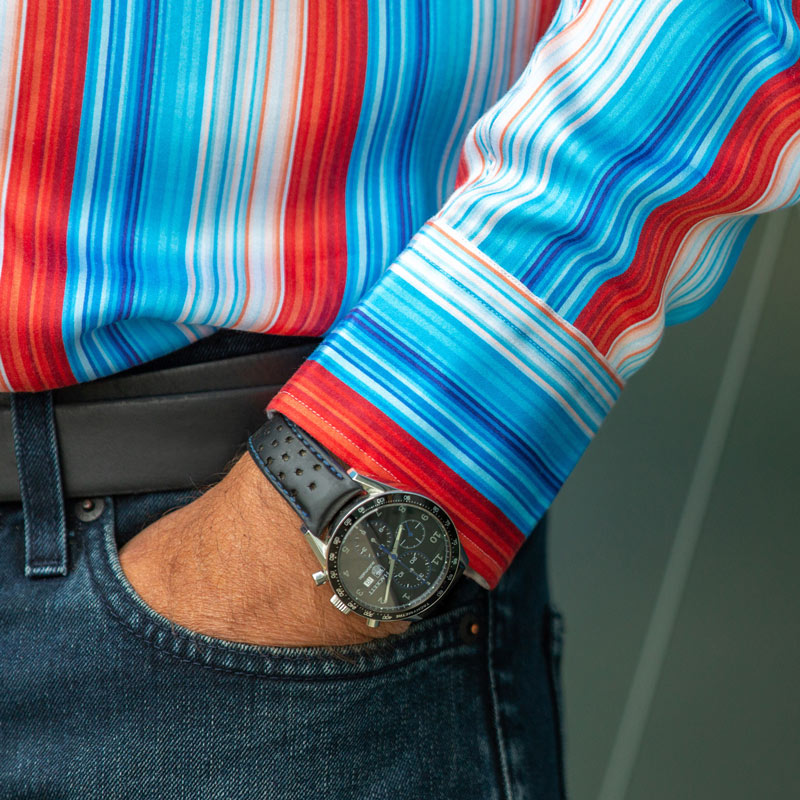
What to do with the warming stripes? Scale, size and frequency of the repeats were going to be important aspects, affecting the overall impact of the design. Not least because if you go too big, the design becomes extremely wasteful – pattern matching is harder on large patterns as you create lots of waste material. I was mindful of not wasting any resources in the delivery of this project.
There was also the enclothed cognition aspects to consider. We wanted this to be something that inspired people, empowering them to share their interest with others. This wasn’t yet another slogan Tee shirt, it needed depth and sophistication too, able to defend itself.
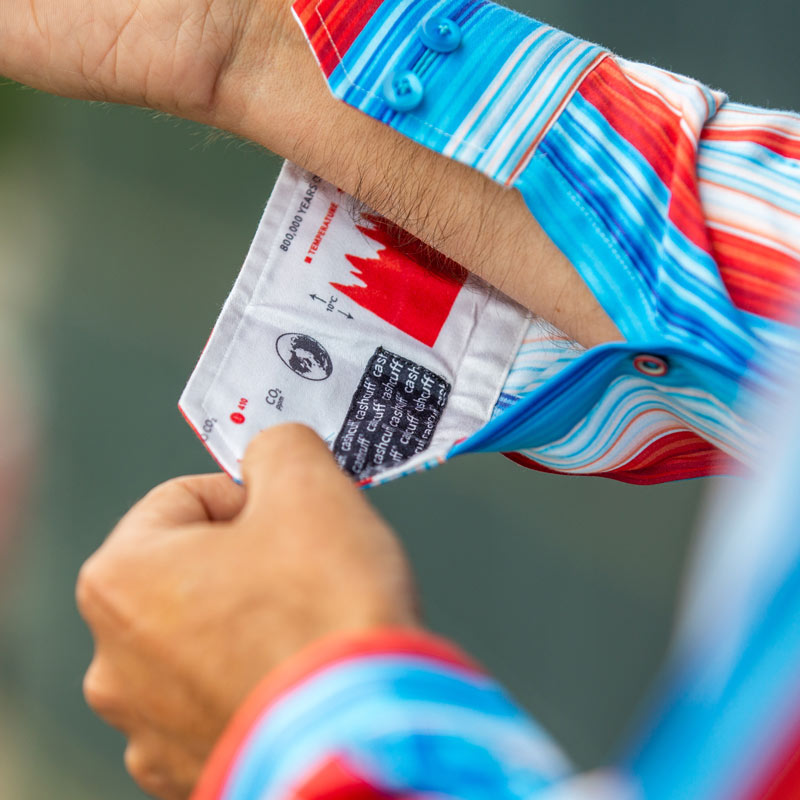
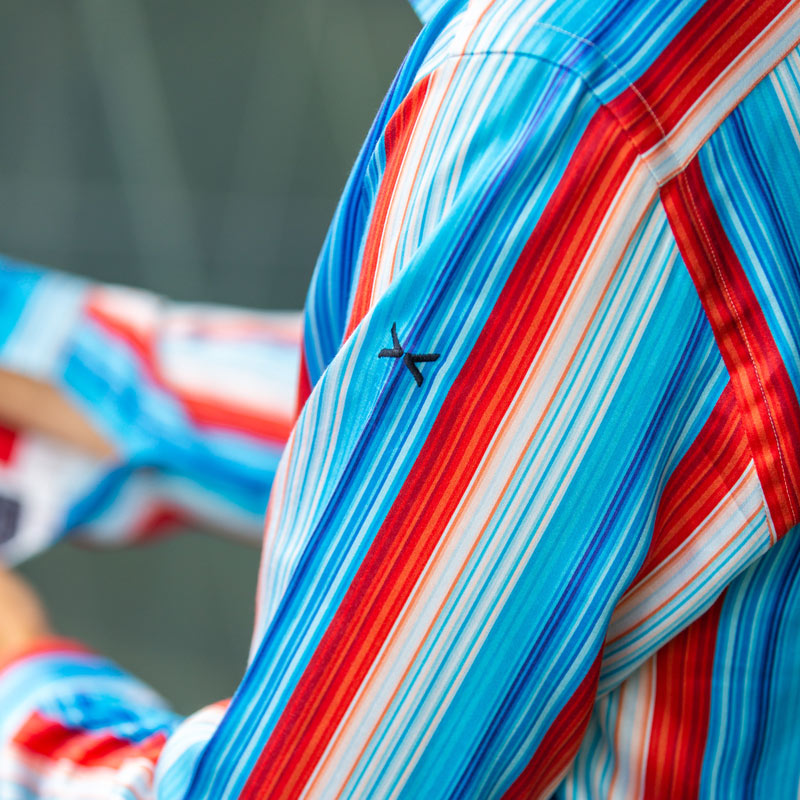
Enter the reveals within the collar and cuffs, the climate data facts to back up the stripes. I also introduced a black button on the front placket to remind people about the ozone layer. A story that when it broke in the 80’s, seemed impossible to solve, yet we did it with collective bold decisions and nature has done the rest (the hole is considerably smaller and now healing naturally).
A very big part of this project was the material that we would use to make the shirts. I wanted it to be sustainable. I had admired Lyocel and other plant based materials from a distance, hopeful that one day we would be able to embrace this technology and reduce the impact of our activities on the planet.
This project gave me the push to make that dream a reality, the shirts were made from Tencel – a wood-pulp material, with award winning sustainable practices. The Tencel was digitally printed to further reduce the impact of what we produced. Details that many people might never know, but for the people we were connecting with, they would be critical purchase decisions.
Defining the experience
COP events get a lot of attention. We now had a product that told the climate story in a new way, but that wasn’t enough. We needed to package it, create an experience, complete with all the supporting materials. This experience included fact sharing, nothing new in that, but I wanted to package the facts up into something that was more interactive, something that would engage people in what we were doing. We needed something that would bring all of these aspects together in a memorable experience.
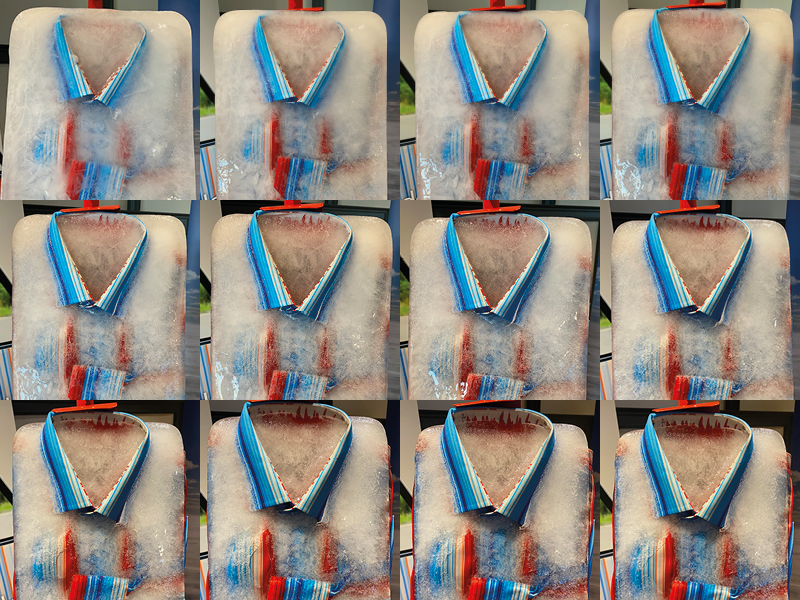
The “Show your stripes” melt events was the solution. This featured two key elements. First and foremost we had the shirt, which told the story. I chose to present the shirt folded, held rigid within a block of solid ice. The ice allows you to still see the shirt and the interaction of it thawing allowed people, wherever we were, to connect not only with the warming stripes, but with the concept of glacial melt and reveal of the shirt. Without the need for any major facts or figures. We were clearly delivering our message, but in a new way that caught peoples attention.
To enhance the physical experience, we asked people to guess the melt time, gamifying the interaction, getting people to come back time and time again to see what had happened. We also asked people to get involved through an app with prizes, whereby we could share further information about the warming stripes and our goal – reducing global warming, whilst also building a database of people who felt connected with what we were doing.
This hadn’t been done before, the questions within the app also allowed us to learn and segment the audience. We did this in order to better understand what these people wanted from us. The questions and answers helped inform us about their personal preferences so that we could build upon the positive conversations we had started in the future.
This was all wrapped up in the ‘Show you stripes’ line. It’s a saying that’s in common use within English language. It’s meaning is very clear, there’s a pride associated with it, an honesty and integrity that simply felt right, not least because we were using a striped graphic. And so “Show your stripes experience” was born, in Glasgow at COP26 with the reveal of the Climate Code shirt.
The beginning of a bigger movement
When we work with clients we are always aiming high, shooting for the stars. The angle of our aim is very much influenced by resources. The greatest ideas don’t get very far if no-one knows about them. Spreading that ‘knowledge’ can come from many, many places, but all of these sources have associated costs.
We had to be realistic; this wasn’t a big-brand campaign, this was the beginning of something that we felt would grow and expand. We needed to get the best return possible from this investment, and we achieved that.
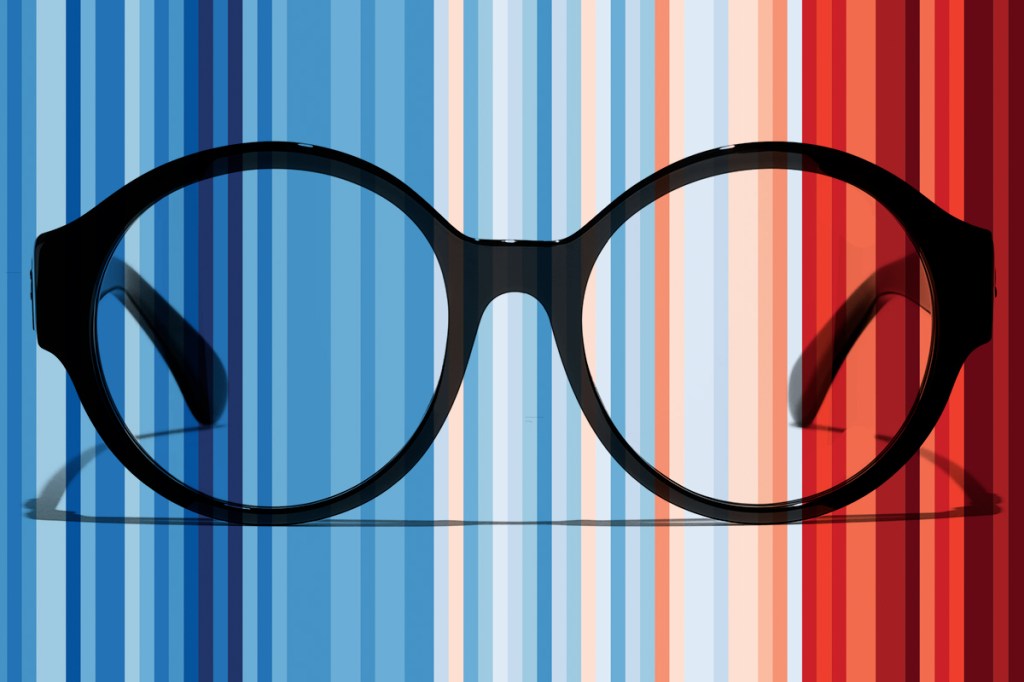
When I see ‘show your stripes’ today, it is a testament to the passion we put into the initial work. Not that we created this single handed. There have been many people who have picked up the baton and run with it. Our efforts at COP started the movement, achieving international media attention and coverage.
A small part of a big process
I love being part of a wider team, especially when that team has a shared purpose. I’ve thought long and hard about what it is about this work that brings me joy. It’s not something that I’ve found easy to articulate but here goes…
What I love is humanising things and processes, giving people reasons to care and connect with things. My comfort zone for these activities is behind the scenes – proud supporter, curating and communicating the narrative. However, there was nobody to present this work within our budget, so I had to do it.
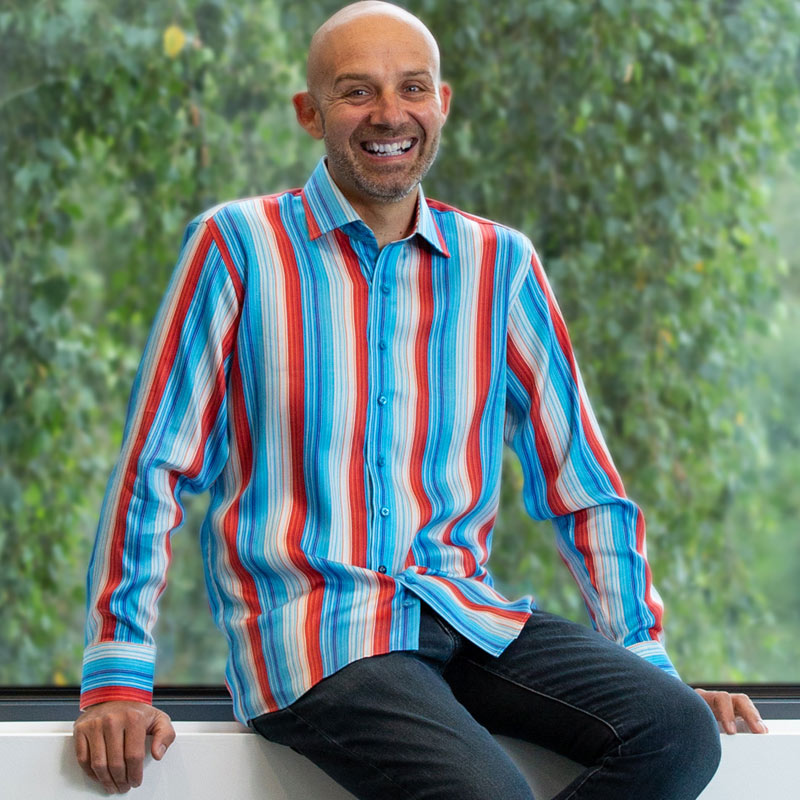
I took to the stage, pushing myself outside of my comfort zone, embracing almost every challenge that presented – learning on the job at times, always refining my knowledge and broadening my experience, and the experience of the teams around me who support my work.
This is what I love – empowering people, creating community…creating a buzz, connecting to the human needs within us all.
Branding for good
This is something that I believe in. Connecting people, solving problems and somewhere amongst all of this, having fun.
If what you’ve read here has sparked your interest and you’d like to know more, let’s have a chat. There is absolutely no pressure or expectation. Thanks for reading.
 Busy as AB