
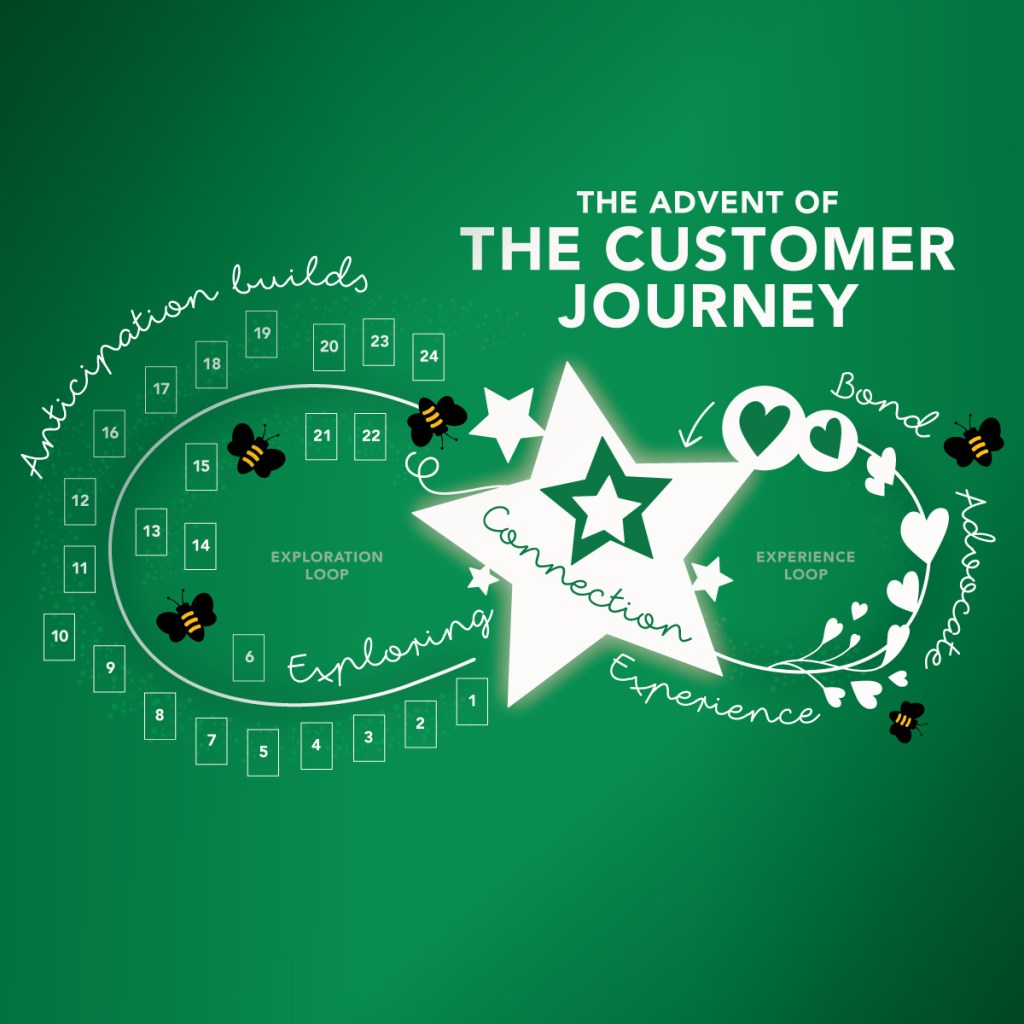
27 Touchpoints to consider when developing a B2C food retail business in the UK
I have already explained our approach and personal motivations for developing the customer journey – see the red ‘Advent of the Customer Journey’ blog intro section. What it does, how it works and how that helps us to help you connect with people.
This post is about a very different type of business, B2C food retail based in the UK, an area that we have a lot of experience within.
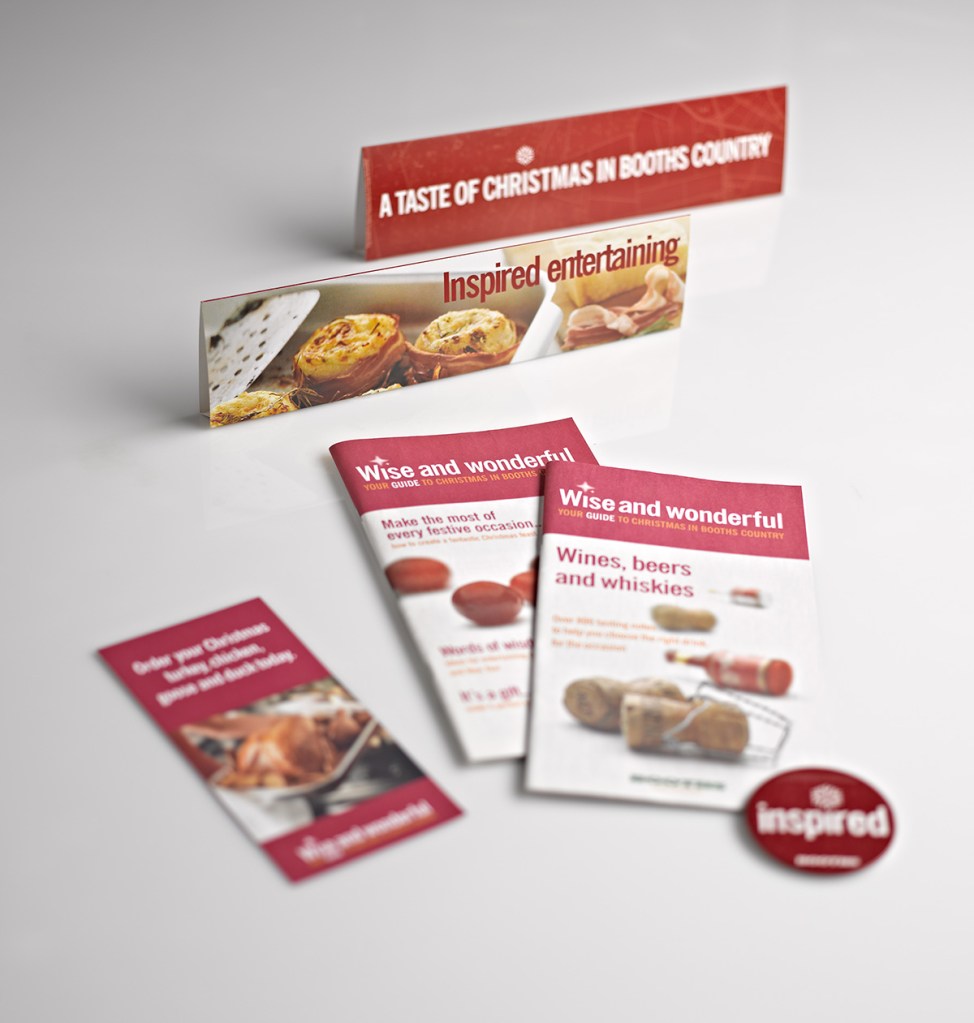
For this customer journey I’m going to introduce sectors to the journey, starting with discovery moving into consideration and research. The path then moves into connection and purchase (both online and offline) before continuing the infinite loop into experience, advocacy and bonding before we return to discovery and repeat the cycle. So let’s get stuck in.
The start of the journey
Discovery and building awareness
Again, the running order of these touch points is NOT indicative of how we would prioritise them, for every business is different – different wants/needs and solutions, also different audiences.
1 – TV, radio and streaming advertising
Please hear me out. I’m not pitching for TV work here I promise. First and foremost, in order to even consider using this touch point, I would always advocate having a really good level of customer knowledge in the bank (so to speak) before committing to this or any other form of ad – not just broadcast ads. TIP – It’s crucial to do your homework. That means put in the time listening, so you know and understand the space.
You need to be confident of the fit. Essentially you are trying to join two things that you believe have a common ground – providing a solution that fits with the needs of the people watching/listening. If you don’t know the audience, you’re shooting in the dark which will burn through budget with little to no return. It will be very frustrating.
Now let’s assume that you’ve done your homework, you know your customers well and have a clear handle on who is and isn’t interested in what you have to offer. Then broadcast or streamed ads are a fantastic opportunity to engage with people whilst they are doing something that they enjoy. That’s a powerful association.
Assuming that your product or service fits with the subject of the broadcast, this is a wonderful way to build brand awareness and establish an alignment of values. Some people will scoff at this touch point, saying it’s beyond the scope of most businesses, and I totally agree that used to be the case. Today it is much more cost efficient and much more practical.
There are lots of small businesses running broadcast and streamed ads. The broadcasters and media channels have adapted, offering all kinds of entry points and geo-targeted campaigns. This has reduced the cost and also removed a lot of waste from this system. Don’t get me wrong, there’s still hot spots around certain programmes that command huge audiences and require big budgets for that airtime.

2 – Paid social media ads (Facebook, Instagram, TikTok et al)
Before you jump into boosting posts and putting ad spend behind content, stop and take some time to listen to what’s happening within the space. Spending time on a channel, looking at what your competitors are and aren’t doing will allow you to get a feel for the vibe. Then you’ll know whether you have anything to add? Challenge? Or possibly disrupt! TIP – There’s already a lot of noise, adding to it is not a recipe for success.
Don’t be afraid to experiment – these channels are a great place to run some tests, check your messaging resonates and when you find a formula that works for you, then you can start to consider paying to expand your reach.
TIP – I think it’s really important for B2C food producers and retailers, to have some fun elements of the activity within your content plan. Remember that was what these places were set-up for – fun. They were never supposed to be sale channels (allegedly). Last but not least, be careful about where your content is placed, it can be hard to measure, but it’s important, there are real life places you wouldn’t advertise or promote your product in, social channels are exactly the same.

3 – Organic social media content
TIP – Pick one or two channels where there is already a strong movement aligned to your area of expertise. Less is more here, spreading yourself over every channel will require a lot of resource, and some fine tuning around what you do and don’t post, because this is not a one fits all space.
When you know your audience and the persona’s within it, you can achieve a lot of connection with organic content. Knowing the language, the terminology and the in-jokes, ensures that you don’t inadvertently put your foot it by not understanding the space and those you are connecting with.
TIP – This touch point requires resource to work well. It’s not some kind of voodoo magic or automated bot heaven. The good connections and conversations come from real people sharing passions. There’s no quick fix and the consistently of turning up is really, really important. Step back and think about what time, energy and resource you can afford to commit. Be honest about what you’re looking to achieve here, this touch point on it’s own will not do all the work, it’s one of many that need to be joined up, working towards a clear next step in the journey. Last, it’s not a funnel to force people through.
4 – Outdoor advertising this can be all kinds of spaces, from bus stop (6 sheets), billboards (48 sheets) to bus sides, taxi panels, vehicle and building wraps and a host of other city centre media. This touch point can really connect with people. Successful use is strategically planned – both in the timing and the locations used.
This point of the journey is all about consistency. TIP – Outdoor ads build on what people have seen elsewhere. Whether that’s TV, radio, print, socials, it doesn’t matter, they are reminders of the brand or product. What you have to offer, why you’re your different, where you are etc.
The average viewing time of these things is around 2 seconds, so your message needs to be clear and very concise. I like to think of these pieces as memory joggers. They present the opportunity to show the brand within spaces it may not have been visible before.
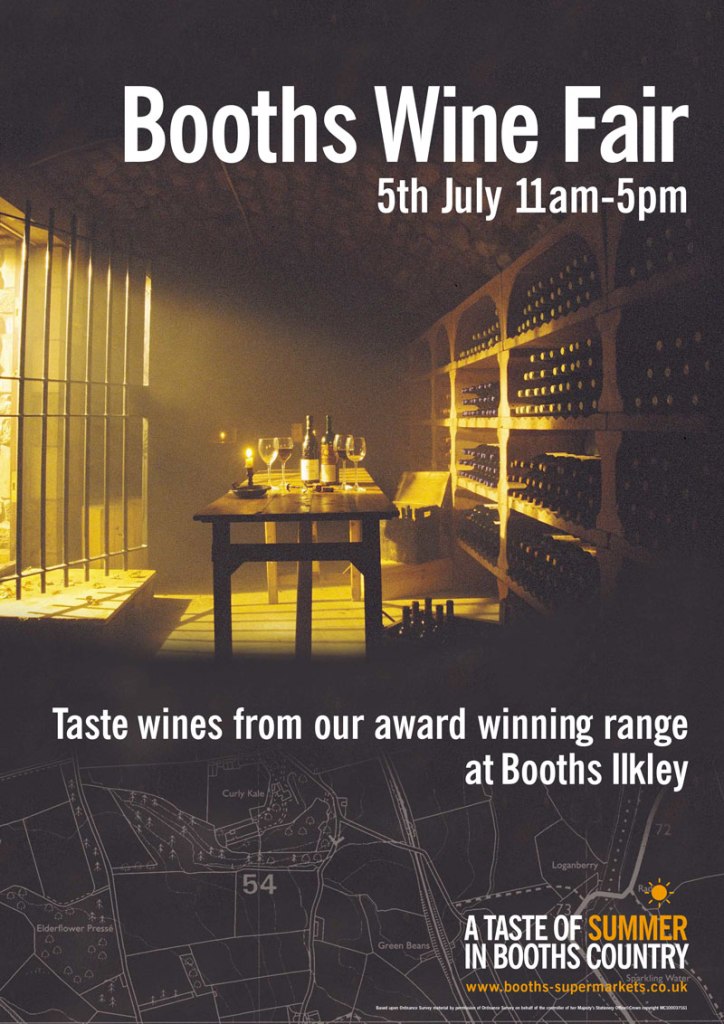
5 – Flyers and local micro-marketing Never underestimate the good work that can be done within small geographical areas using simple communications such as flyers. Whether you’re a big business or a budding bigger business, if you know your customers, understand where they are and the places that they go this touch point can really help you connect.
TIP – With so much digital content being broadcast at us every day, a low-tech, well informed flyer, poster, taster/sample pack or an A-board are all likely to get more attention within physical spaces, especially when they are done within close proximity of your store, outlet or pop-up. These physical objects help establish trust quicker than almost anything else. What you see, touch and feel – tells people many things about that business or product. As always, first impressions count.
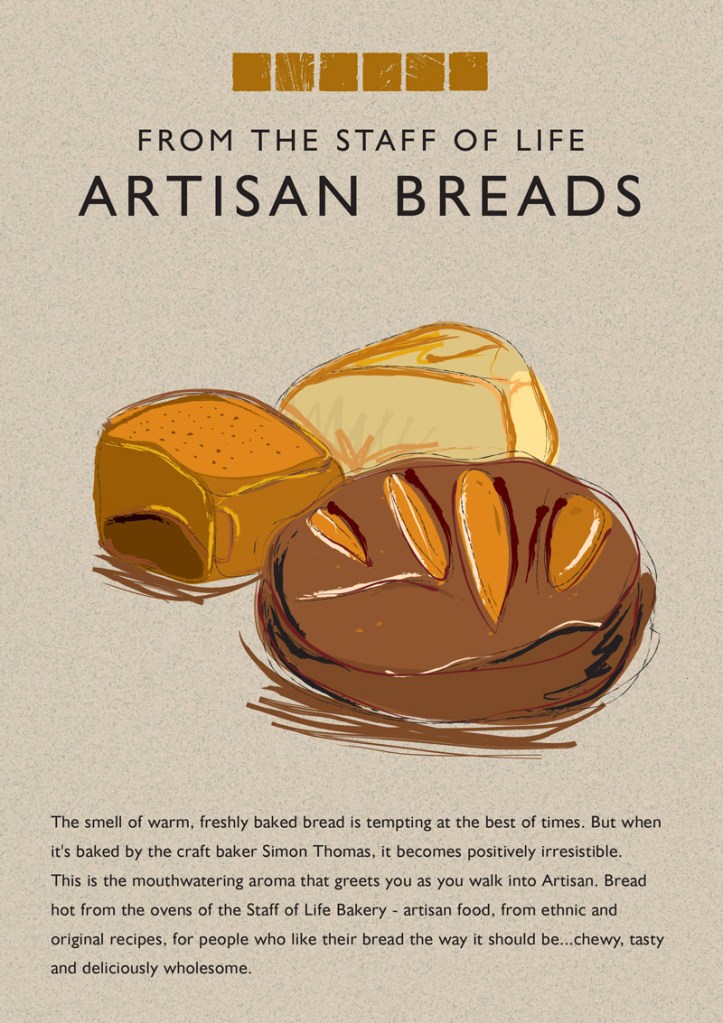
6 – Word of mouth and online mentions. I said it in the B2B touch points post, word of mouth and recommendations are the best way you will connect with people. An in-person recommendation will do more than any other touch point, such is the power of understanding the customer journey.
It’s increasingly likely that the word of mouth will happen online, in places like local Facebook groups, Reddit and in TikTok’s which can put your brand or product on peoples radar and begin their journey of exploration.
You need to put in a lot of work behind the scenes in order for the mentions to happen, the chance of them coming totally organically is very rare. For most businesses this touch point is the result of all kinds of other activity, often PR and physical retail experiential design or online gamification, that connects your product into peoples values in ways that feel natural and fun. TIP – Curated mentions often lack the raw edge of genuine user generated content. This is a touch point where your relationship with the other person (who is talking about you) needs to be crystal clear. So that you both know when the time is right, what to say and when to say nothing.

7 – Food bloggers and influencer partnerships There’s a strong echo here of the point above. It’s a really powerful touch point in the journey, but it doesn’t happen by magic, it’s the result of the investment in time. Time spent with the writers, creators or influencers, building a relationship, being honest and truthful about what both parties want to achieve. It’s a partnership and a really important part of that work includies being realistic about the time lines – which will always be longer than the business who’s brand your building would like. Patience and going slower in a more focused way doesn’t always come naturally to the people driving a brand forwards, but you cannot force feed your brand to people.
Ok, by this point confidence is building around the brand and we head into the next part of the journey – consideration and research
8 – Websites As most of this journey is likely to be explored online, your website is an obvious touch point. If you’re a physical retailer or pop-up your website is still a very important touch point. There’s many reasons websites are often described as ‘shop windows’. Where once we looked in from the outside of an actual building, today we’re still looking in, only this time through a browser window. What entices people in, encourages them to engage is shaped by the work that you’ve already put into the exploration and discovery phase of your brand journey. TIP – Remember your website cannot be a one fits all. It has to be tailored, things like landing pages developed around specific customer segments and persona’s because when you try to be something to everyone, you end up being nothing to everyone.
9 – Offers This is a tricky touch point in the customer journey, they certainly have their place, but need to be managed with great care and control. If your brand becomes associated with discounts, the perceived value of the product is reduced. That can be the death of some businesses, your price point is seen as artificial, and everything that you do is tainted with the sense of being over priced, fake and untrustworthy. The result can be that no one pays the full price and your margins disappear.
On the other hand, if your customers are price sensitive. Showing that you understand that sensitivity with regular deals for those who support you can create fantastic bonds. Lets’ be honest, that just feels fairer (the support has to go both ways) and that is what everyone wants, to be respected.
TIP – I know that I’m sounding like a cracked record, but the hub around which all of this is built is super important. It’s why you have to set aside the time to listen. To slow down, accept that the change won’t happen overnight and build programmes of activities that feel aligned to human values. There is so much to learn here about the people that you want to connect with. Offers present the opportunity to make good connections that stand the test of time. And they are much better for everyone (the business and the people who are it’s customers), so listen, listen, listen and then your reaction will be in tune with your audience.

10-Emailings For me the most important thing here is the quality of the sign-ups. Offering people discounts used to work (and will still work for some businesses/products), it really does come back to understanding what people want from you. I feel that today people are looking for more of a reason to connect with a business or brand. Things like special events, tastings or brand collaborations provide a better incentive to share your email address and the opportunity to demonstrate your values, your humanity in many more interesting ways than a bombardment of email offers.
Depending on the product or service and of course your customer insights, things like recipes and seasonal variations can work well. As can supporting wider initiatives, such as major sporting events like the London Marathon and charities where you can demonstrate values and build great connections through interesting stories that go beyond your product or service.

11 – Promotional leaflets Building on the micro-marketing and local touch point already described, in-store promotional leaflets can be great touch points for your customers. Whether these are recipe ideas, foodie accompaniments, food and drink pairings, flavour experiments, limited editions, tasters, the list goes on. When this type of flyer is within proximity of your product within a retail space the opportunities for people to connect with what you’re doing increase significantly. For me it’s about creating a sense of occasion, a micro moment, making someone feel special. TIP – This touch point works well within larger retail spaces, where you can dress the set, adding depth and back stories to the front facing products.
This can work very well with offers -see earlier note about striking the right balance here. Limited time offers when people are physically within the space can nudge them forward to connect – it’s FOMO – but there needs to have been a lot of work done elsewhere to give people the confidence that this is the right choice for them. This touch point works hard within most food businesses, but it has to be part of a strategically planned process.
When you make a connection and purchase (In-Store)
I’ve broken this down into 2 separate sections – in-store and online. Now most B2C food retail businesses will have both, they each have important roles to play – there are some similarities, but also some big differences.
12 – Shopfront and window display branding I cannot emphasize enough how important the exterior of a physical premises is within the customer journey. This is a moment of ‘truth’ for people. Everything that they have seen until this point has been information gathering, that process has created an expectation, how you present your premises has to meet these expectations. If it doesn’t people will stop in their tracks and question whether they have made the right choice.
Window displays are a really significant part of the experience. How you merchandise and display your product needs to be consistent with the brand messaging and brand building that has come before. This has to feel joined up, connected, it also needs to have a sense of wonder.
That sense of wonder can come from scale, size, volume, fun, amazement and intrigue. Simply showing your product in the window is not enough, it needs a theme, a message and a sense of character that is attuned to the rest of your customers journey with you thus far.
TIP – Consistency across your messaging is really important throughout every customer journey. If you have a physical store, ensuring that consistency of message, style, colours etc is essential.
Whilst I’ve talked a lot about store front and window displays, the in-store experience goes way beyond these elements. There are a myriad of touch points within your store itself (some of which I’ve included below), that will have an emotional impact that as they leave the store, whether they have purchased or not.
13 – In-store navigation and signage Not only does your store need to feel inviting, it also needs to feel familiar. This can be tricky, but a sense of familiarity comes from keeping things simple and clear. It’s very easy to overwhelm people – new place, new products/service, new brand! That is a lot to process, taking the time to make sure that the path around the store feels natural, is clear and understandable all feeds into making the experience enjoyable and familiar. There’s also a case for disrupting these ideas, if that has already been part of your communication, if challenging and providing unexpected reveals is part of your brand, then you need to keep doing that in-store. At the end of the day, the feel needs to echo what’s come before.
Signage is a term that covers a multitude of things, not just signs. It’s about all of your POS (point of sale), ticketing, zoning, packaging and it crosses over you’re your people culture (more about that later).
14 – Shelf layout and product displays This is your space, so it is within your control to show the product to it’s best. Lighting is as important as the shelf structure and layout. Maintenance and cleanliness, equally important aspects, especially around food products.
This is also an opportunity to have some fun, mixed amongst the practicalities mentioned above. TIP – Product displays are also one of the strongest ways to convey brand values – less is often more, but don’t get too minimalist, that can create major barriers, making people feel uncomfortable within a space.
15 – Staff interactions and customer service This touch point is powerful (I know they all are, but when you’ve got people coming to your store, you’re doing lots of things right, you’re making connections, keep going!).
The customer facing team are quite literally the face of your business. Investing in people who are in-tune with your ethos is so powerful. I’m not a HR expert, but recruitment of people who are already fans, have great knowledge and experience within your sector and can talk about these passions, is the goal here. The people you really want on the team are fans, their energy and enthusiasm will connect with people in a positive way, bring so much personality to the products, humanising them.
When the team recruitment is done well – enthusiastic people and open, honest sharing of information (about the company, ethics, products) and goals (looking beyond the sale to lifetime value and other brand values or connections such as ESG). This wider, empowered view creates a group of people passionate about what you do. People motivated by a shared ambition. These people are able to connect and expand upon everything that has come before in personal ways.
TIP – Shop your competition, find out what they are doing well. Learn from it, look at what you could do to achieve something similar. Customer service is an art. Like every art form it can be finely honed when you truly understand the people who you are serving.
16 – In-store tastings Quite simply the most powerful touch point for any food business. Yet so many get this wrong. There are a few reasons for this, it can be that the brand has overpromised. The expectation is set very high within people’s minds and the reality simply doesn’t match those expectations. If that’s the case you need to step back and take a fresh look end-to-end at what’s being communicated to understand where the disconnect happens. Lean in to the disconnect (if there is one) ask people how they felt, what was wrong and really listen to what comes back. Our best learnings can come from these uncomfortable moments, we shouldn’t shy away from them, and never ignore them.
When an in-store tasting doesn’t connect with people I think it’s often a result of 2 things – wrong time of day/week or the wrong person or people offering the tastings (see my point above about the in-store team). When you share a passion or an interest, your enthusiasm comes through in your body language as much as the words that you actually say. It is infectious and these are the people to conduct the tastings.
Assuming that you’ve got the right people in your team, support them and listen to what they need and what they are hearing back from people. BTW it’s OK to not have them in your team, you can contract in specialists who do this extremely well. Giving you and your team the opportunity to learn from experts.
Tasting are a special time, when you have the opportunity to try before you buy. You are getting something for free, a taste of what’s to come…there’s a lot of good stuff here. Speaking with a knowledgeable person, face-to-face about the product and its back story – your Why? TIP – Tastings also add a sense of occasion to a store, they will attract people who wouldn’t have come in had there not been a tasting opportunity. They create atmosphere, or a buzz as we call it. This is a cumulative effect, pulling in more people – there’s an inquisitive element at play and that can bring with it a lot of fun and enjoyment.
17 – Checkout UX experience (from queues to efficiency and friendliness). This is a crucial touch point, the time when someone hands over cash in return for your product. Ensuring that this step is a smooth as silk is your goal.
Test your equipment, get familiar with the processes so that when you are working with customers you glide elegantly like a swan. Evolving this process into a craft, takes time. It’s another area where your people are bringing so much added value to your product – the conversation, help and assistance that sits around the purchase, including any apologies for anything that didn’t go so well, they are the memories most people will remember. TIP – This is not closure, this is not job done. Remember this is a constant process, it never really stops. This should be the beginning of an exciting second phase, a time when the customer really connects with what you are doing, becoming an advocate. It’s at this stage that they will begin sharing their experience with others, putting you into the area of exploration and consideration with more people.
18 – Self-checkout experience Using a machine to check out is becoming more prevalent within physical stores. Personally I think it misses more than it gains. Whilst the systems are often very slick, they cannot problem solve, interpret and customise like a person. If speed is a major driver for your customers (you should know if it is) then there’s probably a place for this. For me, a well-trained, experienced in-store advocate will do an infinitely better job, ensuring the customer walks away confident about the choice that they have made. Machines just cannot do that in the same way.
When you make a connection and purchase (Online)
Online can be stand alone or it can simply be another channel that a business operates in order to connect with it’s customers. For certain products online out performs in-store and vice-versa, there are products where in-store is more important than online – considered purchases – this doesn’t usually apply to food retail, unless you’re food gifting, where in-store will allow people to get a much better appreciation of your product. Within food retail, there are lots of variants, for most food businesses the opportunity for people to see, smell and taste where the product is made is going to be the most powerful.
If convenience is a major driver for your customers then the website may well be the place to focus, let’s look at this a little closer.
19 – E-commerce UX
Clarity, speed and convenience are the biggest drivers for most web stores. Lets’ look at each point in turn.
Clarity
Most websites contain a lot of information. How that information is organised, categorised and presented has a huge impact on the time people stay on your site. This is an area where your audience knowledge and customer profiles or persona’s comes into it’s own. Websites are easily personalised, tweaked and refreshed giving you the opportunity to test, refine and really hone your message.
Speed
Of course you want to show your product in the best light, the greatest pictures, maybe even some video as well. Too much of this type of content and your site will be slow. This impacts your organic search position and it really upsets your customers and would-be customers when they want to use the site on the move. Yes mobile technology has come on a long way, but assuming everyone is on a 5G, full bars connection is a mistake. Keep your site lean and even better have a completely separate mobile site, optimised specifically for mobile browsing.
Convenience
Within food retail there are some pretty clear lines about where convenience is and isn’t important. Know where you fit, which side of the line and adjust your website appropriately.
TIP – A fantastic desktop experience is not guaranteed to produce a great mobile experience, and vice versa. Look at your products, understand how much of a pull or push factor convenience is for your customers and create a site that is appropriate to those needs.
20 – Mobile shopping experience
Shopping on a mobile device is totally different from in-store. The competition for the attention of the browser is significantly higher. Attention rates are also a lot lower, and the general noise level is much, much higher.
The biggest stumbling block for most people when buying online is the shopping cart experience. Adding, removing, refining, re-ordering it takes time and demands your attention. Whilst creating an account will reduce this mental admin, that process requires careful planning (cost, frequency, benefits etc) in order to incentivise someone to set-up an account in the first place. Every business will need to analyse it’s database and work out the cost of this acquisition before attempting to convert people to sign up.
TIP – Keep the checkout, cart or bag process simple and clear. Give people an easy to follow visual reference of where they are within the process at all times. I like to think of this as a kind of timeline or progress bar, allowing people to see quickly where they are. Without this kind of visual aid, people are faced with screen after screen of forms to fill in, many people give up or simply become distracted by something else.
21 – Free or paid delivery?
This is such an important aspect of every online transaction. An important touch point where things can fall over quickly. I think that it’s worth reiterating just how busy this space is. The vast majority of your customers will not be carrying out this process in isolation. They will have other apps running, notifications arriving and more. Attention is in short supply. Their bandwidth for unexpected, additional costs, extremely narrow.
When what they see, is not what they were expecting, especially around shipping fees, this can be enough to prevent completely stop. They will shut down, often going elsewhere in search of a way to get the same or similar product without the shipping fees. The chance of them returning is low.
As I’ve mentioned many times already, how and where you communicate is important. When it comes to the costs of shipping don’t try to hide this from people, it will backfire. Your customer data will tell you if shipping costs is a barrier, it may not be, depending upon your product and your audience.
This comes back to understanding the people you are serving and your place within the market. If your customers are price sensitive and there are multiple ways to get the same or similar product, you have to ensure that your delivery mechanism is tuned in to the needs of the people that you want to serve.
TIP – This may seem like a small detail, but it can destroy all the groundwork that you have put in to date. It’s important to be honest and transparent with your customers, clearly displaying shipping costs throughout the journey should be your baseline.
22 – Click and collect
This can be a great way to get people to your physical store, where there are all sorts of opportunities to connect and share an in-person experience. But remember why the customer chose this option – speed and convenience. If you don’t deliver on these elements it will result in frustration, so don’t engineer a complex system. Keep it simple, give it the energy and resource it needs within the store to function well.
There’s nothing more frustrating, from a customer POV, than arriving in-store to find no-one on the click and collect. This only becomes amplified if the process is slow.
Of course you’d like these people to spend more time in-store, see and learn more about what you’re doing. They are unlikely to do this when the process has been frustrating. They will just want to leave as quickly as possible. Whereas if you are efficient and personable in the completion of the collection process, the parting emotion is much more positive. Therefore these people are a lot more likely to stop and engage with other parts of your store.
TIP – If you’re outsourcing this element to the third-party, be very careful about what metrics you are measuring. Remember these people and this process are operating at a fork in the path in terms of the customers journey with your brand. Get it wrong and they are gone, who knows when they will be back. Get it right and they will be back, probably for more, with greater frequency, advocating your product to others. It is possible that a third-party fulfilment provider can do this well, but sense check the fit with your values, ethos and outlook as they are operating at a pivotal point in the journey.
Customer experience
This is possibly the most exciting part of the journey. This is the point where expectations and reality mix, everyone (customer and provider) involved has put a lot of time into get to this point (within the journey). Now is a golden opportunity to deliver on what you’ve promised.
Like so many other parts of the Customer Journey your knowledge of what people are expecting from you, what you can deliver and how you can best support that experience is invaluable.
If you’ve really been listening, reacting and planning this should run smoothly. If it’s not playing out as you had envisaged it’s time to lean into the discomfort that can come within the customer experience and learn where you need to adapt and change in line with what is happening.
23-Loyalty programmes
These are a great way to add value and build trust with your customers. They provide excellent insights for the curators, with detailed data mapping customer habits and trends. TIP – If you’re the custodian of a loyalty programme I believe that you need to be really clear about 2 things – 1) The value you can add. 2) Respectful of the unspoken exchange of information.
23.1 The value you can add
Loyalty is something that is a constant battle ground. Today there are lots of providers, offering similar or the same products which can create all kinds of problems and challenges.
What value can you add? Time to zoom out and look at the big picture, really getting into the data. Understanding what might motivate a customer to remain loyal and aligning that value or thing (it doesn’t have to be a discount) with your business model, making sure that what you can offer today is sustainable for the future.
Short term strategies such as lost leaders don’t create loyalty, the customers that are searching for a deal will always be searching for a deal, buying from whomever offers that product at the best price on the day. Whilst I’m using this as an example of what’s not sustainable, there can be occasions where footfall is the goal, you want eye’s on your product and lost leaders can achieve that, but be careful, once a customer has associated your brand with a serious saving or discount, moving them away from that association takes a lot longer, and costs you more money.
So what other forms of value can you add? Depending on what you’re producing and retailing, there’s lots of options. From pairings to tastings, charity support and other good cause activities. TBH, it can be so many different things, but it needs to feel human. A genuine gesture of good will and an outstretched hand of thanks in gratitude. All of which is very achievable when you’re listening to your customers and understand their wants and needs.
23.2 Respectful of the unspoken exchange of information
Don’t ever assume that people haven’t joined the dots around whatever loyalty action you have devised. We all know that we are trading information for product here. It’s not openly said, or even inferred, it’s a kind of social agreement, both parties are gaining something that they want from the deal.
If you’re the brand thinking of offering a loyalty scheme, whatever way you shape and frame it, always be respectful of the unspoken exchange that’s taking place.
Whilst we tend to think of loyalty being something that is done within big businesses, small and micro businesses can often achieve a much better connection with a loyalty offer because they’ll keep it simple, listen to the customer feedback, react and adapt, building a better relationship with their customers.
24-Customer support
Making contact with a business has never been more complicated. Whilst the technology that we have today allows us to contact them quickly, for the business it can be confusing if it’s not handled well. I mean which way do you go?
Email, phone, chatbot, live chat, text message, whatsapp? The list goes on and on. Keeping up to date across all of this requires a dedicated team. Yes the tech can do some filtering and collating for you, but ultimately this is about a personal relationship.
The business has personified the product because you want people to connect with it. Therefore when that customer wants some support, they are looking for that sense of humanity to be there, front and centre.
TIP – Cracked record time (again) – knowing your customers, understanding their needs will inform you about the best ways to support them. Just remember to keep these people feeling respected and valued, with humane support.
25-Customer deliveries
Seldom is this carried out by the business producing the goods. Most likely it will be a third party provider. Your choice of supplier is crucial as that choice will say a lot about your product to your customers.
Things such as the driver’s professionalism (they are the face of your brand at this point in the journey), punctuality and delivery time will all influence how your product is received.
Packaging plays a really important part of this section of the journey as well. Too much and it will feel wasteful, not enough and the products will be damaged. Materials, textures…presentation, it all counts. How the products left you, is how you want them to arrive with your customer.
In the case of supermarket food deliveries, all of the above is very much applicable, plus they have the opportunity to go a few steps further. How the products are packed is really important – striking the balance between efficiency and damage – crucial.
As is empowering your delivery person to help the customer at the point of delivery. Allowing them to offer a sensible substitute, apologising for lateness or damage. There’s so many things that the delivery can add to the customer experience, it’s well worth listening closely to feedback and maintaining a watchful eye on proceedings.
26-Aftersales communications
This often involves emails or texts. These can be heavily automated, and we can feel that, it’s very easy to send this information out, less is certainly more. It’s important to remember that whatever you send it should be simple and efficient. That will make it helpful, repeating these messages more than once becomes annoying for the other person.
Read to room, just because you can send notifications doesn’t mean you should. One well informed piece of communication is much better then 3 or 4 dribs and drabs. TIP – Remember to put yourself in the customers shoes, what’s genuinely useful and what’s intrusive or annoying – and that can include your CTA or upsell attempts when they are tagged onto the end of a message. Be patient, play the long game. Loyalty does not come quickly and it can be eroded in the blink of an eye.
27-Returns and refunds
Some people will read this and think that there’s nothing positive to be gained here. You’re wrong. How any business, particularly a food business handles a return or complaint will massively influence the relationship that they have, or don’t have, with that customer and other customers.
TIP – This is a great opportunity to learn more – improving your offering, becoming better attuned to the expectations of your product in the eyes of the customer. Afterall, you’ve already put in a lot of work to get to this point, throwing that away simply doesn’t make sense. Really listen to the feedback, remain polite and make whatever refund is requested (assuming the person is being reasonable). Then step away, reflect and look at how the disconnect has occurred. This is where you can learn so much, it’s through this return and refund process that you sharpen your customer service, improve your product and build trust with your customers.
Advocacy
The next part of the journey is advocacy. The point where you have met the expectations of your customer, everyone is happy and now it’s time to nurture the joy, fun…excitement, whatever the emotion your customers are feeling. From here on, they are twice as valuable to you – 1) they will repeat purchase for themselves. 2) they will share their experience with others, influencing their buying decisions.
As this blog is now getting quite long I’m going to pick-up the advocacy section in another post. Thank you for reading, full details of that blog post coming soon.
 Busy as AB